

Ion chromatography plays a pivotal role in the analysis of ionic species, distinguishing between anions and cations. Anion analysis focuses on negatively charged ions, employing ion exchange chromatography for resolution. Conversely ion chromatography instrument, cation analysis targets positively charged ions, often encountering complexities such as co-elution. Understanding the methodologies and challenges associated with each type is critical. The implications of these analyses extend across various industries, prompting further exploration of their specific applications and significance.


The Basics of Anions and Cations
Anions and cations represent fundamental classes of ions that play vital roles in various chemical processes. Anions, negatively charged ions https://laballiance.com.my/, exhibit properties such as larger ionic radii and higher electronegativity, which influence their interactions in solution. Common anion properties include the ability to stabilize cationic species through ionic bonding and the formation of complex ions, thereby affecting solubility and reactivity.
Conversely, cations are positively charged ions characterized by smaller ionic radii and a tendency to attract electrons. Cation characteristics include a propensity for oxidation and the ability to participate in redox reactions, which are essential in many industrial and biological systems.
The balance between anions and cations is vital for maintaining electrical neutrality in solutions, impacting various applications, including electrochemistry and environmental science. Understanding these fundamental ion classes enhances one’s ability to manipulate chemical reactions and processes effectively.
Principles of Ion Chromatography
Ion chromatography operates on the principle of separating ionic species based on their charge and size, utilizing the differential interactions between ions and a stationary phase.
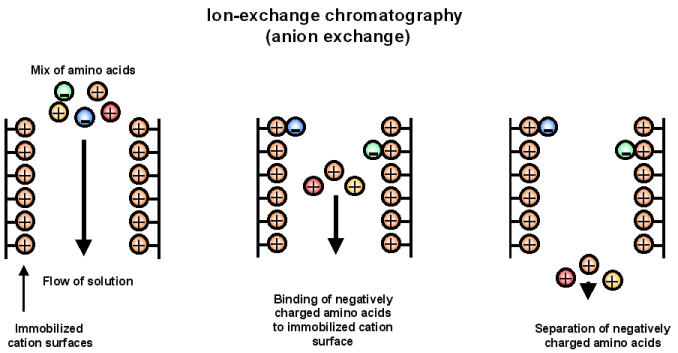
The process begins with sample introduction into a column packed with a resin that interacts selectively with cations or anions, facilitating ion separation. As the sample progresses through the column, ions experience varying retention times due to their affinities for the stationary phase, leading to effective separation.
Detection methods employed in ion chromatography typically include conductivity detection, where the electrical conductivity of the eluent changes as ions elute from the column. This allows for quantification and identification of the separated ions.
Other detection methods, such as mass spectrometry, can also enhance sensitivity and specificity. Overall, the principles of ion chromatography provide a robust framework for analyzing ionic species in complex mixtures, enabling researchers to achieve accurate results in various applications.
Anion Analysis: Techniques and Considerations
When analyzing anions, several techniques and considerations must be taken into account to guarantee accurate and reliable results. Anion detection methods, such as conductivity and UV-visible spectroscopy, play an essential role in identifying and quantifying anions in complex matrices.
The choice of anion separation techniques, including ion exchange chromatography and ion-pair chromatography, greatly impacts the efficiency of the analysis. It is vital to optimize the mobile phase composition, pH, and flow rate to enhance resolution and minimize peak overlap.
Sample preparation is another important consideration; proper filtration and dilution can reduce matrix effects and improve overall accuracy. Calibration with appropriate standards is necessary for reliable quantification.
Additionally, the use of suppressors can enhance detection sensitivity by reducing background noise. Overall, meticulous attention to these techniques and considerations guarantees that anion analysis yields precise and reproducible results, meeting the demands of various analytical applications.

Cation Analysis: Methods and Challenges
Cation analysis requires a nuanced understanding of various methodologies and the challenges inherent in each approach. Techniques such as ion chromatography, mass spectrometry, and atomic absorption spectroscopy are commonly employed to achieve effective cation separation.
Each method presents unique challenges, especially in the identification and quantification of cations derived from diverse cation sources, including environmental samples, industrial effluents, and biological matrices.
Interferences from co-eluting species, matrix effects, and the need for rigorous calibration can complicate the analysis. For instance, the presence of multi-valent cations may necessitate specific separation techniques, while achieving ideal selectivity often demands careful optimization of mobile phase conditions.
Furthermore, the stability of cation sources can influence detection limits, further complicating the analytical process. Understanding these intricacies is essential for accurate cation analysis, ensuring reliable results in various applications while maintaining the freedom of method choice based on specific analytical needs.
Applications of Anion and Cation Analysis in Various Industries
The analysis of anions and cations plays a pivotal role across multiple industries, providing critical insights into chemical composition and environmental impact.
In environmental monitoring, ion chromatography facilitates the detection of harmful ions in water sources, guaranteeing compliance with regulatory standards and safeguarding ecosystems.
Industries such as agriculture utilize this analysis to assess soil quality and optimize fertilizer applications, thereby enhancing crop yields while minimizing environmental degradation.
In the pharmaceutical sector, cation and anion analysis is essential for guaranteeing pharmaceutical quality. It aids in the identification of contaminants, verification of active ingredients, and validation of product formulations.
Consistent monitoring of ionic species supports the development of safer, more effective drugs.
Additionally, food and beverage industries leverage these analyses to guarantee product safety and compliance with health regulations.
Consequently, the applications of anion and cation analysis are integral to promoting safety and sustainability across various sectors.
Conclusion
To sum up, the distinct methodologies employed in anion and cation analysis within ion chromatography underscore their respective roles in accurately identifying and quantifying ionic species. Anion analysis benefits from established techniques that enhance resolution, while cation analysis must navigate complexities such as co-elution. Both approaches are integral in various sectors, including environmental monitoring and pharmaceuticals, where precise ionic profiling is essential for ensuring compliance and product safety. Mastery of these techniques is critical for effective analytical applications.